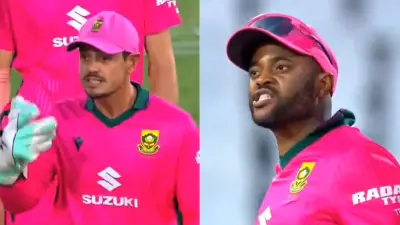
What does it take to walk out to bat in an IPL knockout, knowing one mistake could end your team's season? For Royal Challengers Bengaluru captain Rajat Patidar, the answer is surprisingly simple: stop worrying about getting out.
On Tuesday in Dharamsala, Patidar didn't just talk the talk. He delivered a jaw-dropping 93 off just 33 balls — a knock that included nine sixes and five fours — to power RCB to a mammoth 254 for five against Gujarat Titans. It was the highest-ever total in an IPL knockout game, and it sent a clear message: this RCB team is not afraid.
"I'm not worried about my wicket," Patidar said after the match, his words carrying the weight of a man who has found his formula for success. "I try and put the bowler under pressure."
Why This Matters Right Now
This isn't just another post-match quote. Patidar's mindset represents a fundamental shift in how modern T20 cricket is being played — especially in high-pressure knockout games. For years, batters have been told to "respect the situation" and "play yourself in." Patidar is flipping that script. His approach — take 8-10 balls to assess, then attack without fear — is becoming the new gold standard. For RCB fans, this philosophy is the reason their team is now in a second consecutive IPL final. For bowlers around the league, it's a warning: the old rules no longer apply.
How the Knock Unfolded: A Masterclass in Fearless Batting
The Dharamsala pitch wasn't easy. Patidar himself admitted, "The wicket was not that easy to get under the ball and hit, there was variable bounce." Yet, he made it look like a batting paradise.
After a brief assessment period, Patidar exploded. He targeted every GT bowler, using his quick hands and exceptional timing to clear the boundary at will. His 33-ball 93 was a clinic in calculated aggression — knowing when to wait, and when to pounce. By the time he was done, RCB had posted 254/5, a total that felt insurmountable.
Who Is Affected and What Officials Are Saying
The immediate impact was on Gujarat Titans. Chasing 255, they were blown away for just 162 in 19.3 overs, losing by a crushing 92 runs. For RCB, the win means a second consecutive IPL final appearance — a testament to the team's growing belief under Patidar's captaincy.
Patidar's teammates were visibly inspired. The RCB dressing room, known for its star power, now has a captain who leads by example with the bat and with his fearless attitude. "Super game for us, the way the batters dominated, striking with intent, was good for us," Patidar said, deflecting praise to the entire unit.
What We Know So Far — and What Remains Unclear
What we know: Rajat Patidar's 93 off 33 balls is the highest individual score by an RCB captain in an IPL knockout. His philosophy of not fearing his wicket is clearly working. RCB will play the IPL 2026 final.
What remains unclear: Can Patidar replicate this fearless approach in the final, where pressure will be at its peak? Will other teams now try to counter his "put the bowler under pressure" strategy with early aggression? And how will RCB's bowling unit hold up in the final?
Risks, Concerns, and the Balanced View
While Patidar's approach is thrilling, it carries inherent risk. A batter who isn't worried about their wicket can sometimes be reckless. In a knockout game, one bad shot can change everything. However, Patidar's method — taking 8-10 balls to assess before attacking — shows he isn't blindly swinging. He's calculated.
Critics might argue that this approach works on good batting tracks but could fail on slower, trickier pitches. But for now, Patidar has silenced doubters with results.
Why Similar Trends Are Growing in Modern T20 Cricket
Patidar is not alone. Across the IPL and global T20 leagues, batters are increasingly adopting a "fearless first" mindset. Players like Suryakumar Yadav, Jos Buttler, and Heinrich Klaasen have shown that attacking from the start can dismantle bowling attacks. The trend is clear: in modern T20, the batter who puts the bowler under pressure often wins the battle.
This shift is also changing how teams build their squads. Franchises now prioritize power-hitters who can clear the ropes from ball one, rather than accumulators who build innings slowly.
- Patidar's 93 off 33 balls included 9 sixes and 5 fours.
- RCB's 254/5 is the highest total in an IPL knockout match.
- This is RCB's second consecutive IPL final appearance.
"I take a few balls 8-10 balls to see how the wicket is doing and then I have a clear mind to go about it, I'm not worried about my wicket. I try and put the bowler under pressure." — Rajat Patidar, RCB Captain
What Readers, Fans, and Aspiring Cricketers Should Know Now
For young cricketers watching, Patidar's message is clear: confidence is everything. Don't let the fear of failure dictate your game. Assess the conditions, trust your preparation, and then attack. For RCB fans, the message is one of hope: their captain is leading from the front with a mindset that could finally bring the trophy home.
What Could Happen Next
RCB now heads to the IPL 2026 final, where they will face the winner of the second qualifier. Patidar's form will be crucial. If he can replicate this fearless batting on the biggest stage, RCB could finally break their long-standing title drought. For the opposition, the challenge will be finding a way to put Patidar under pressure — something no team has managed to do consistently this season.
Our Take: Why This Story Matters Beyond One Match
Rajat Patidar's "I'm not worried about my wicket" philosophy is more than a post-match quote. It's a blueprint for modern T20 batting. In a sport where mental strength often separates the good from the great, Patidar has shown that the best way to handle pressure is to ignore it entirely. Whether RCB wins the final or not, this mindset is a lesson for every cricketer: fearlessness, when combined with smart assessment, can produce magic.
FAQs
What did Rajat Patidar say about his batting approach after the match?
Patidar said, "I'm not worried about my wicket. I try and put the bowler under pressure." He explained that he takes 8-10 balls to assess the pitch before attacking.
How many runs did Rajat Patidar score in the Qualifier 1 against GT?
Rajat Patidar scored 93 runs off just 33 balls, hitting nine sixes and five fours, to power RCB to 254/5.
What is Rajat Patidar's batting mantra for handling pressure in IPL knockouts?
His mantra is to not fear losing his wicket. Instead, he focuses on putting the bowler under pressure by attacking after a brief assessment period.
How did RCB perform in the Qualifier 1 against Gujarat Titans?
RCB posted a record 254/5, the highest total in an IPL knockout, and then bowled out GT for 162 to win by 92 runs and reach the IPL 2026 final.